我(作为培训师)刚从本周为期2天演示presentation训练中学习到非常宝贵的一课。 在课上,我告诉同学说,其中一个presentation失败的主因是信息超载, 这是常见错误因为主讲人往往是演讲题目的专家, 因此, 当主讲人热情和投入的时候,他/她就会很自然的提供了很多他/她所知道了讯息。
有趣的(也不幸的)是,我发觉我也在犯相同的错误,在课堂上,由于我在过去1年的时间不断吸收了很多的演示presentation技巧,我把不少这些材料加入了在课程里,因为我深深想信这些材料能大大提高演示presentation的效用, 我控制不了自己这样造。 不过,尤其是因为这2天的课程是入门级一类的,我的改动让课程内容变得对同学太多了。 举例来说,对刚认知演示presentation技巧的人来说,告诉他们沉默或停顿的技巧可能太早了,更不用提我提及的其他约30个不同的技巧/伎俩! 此外,由于提高演示presentation技巧是一种行为改变, 同时间改变多项行为是很困难的。 我应该在一个培训中把要他们吸收的技巧/伎俩数目大大减少,顶多在一天内只讨论3-4主要的技巧/伎俩,让他们每人只注意其中一条,然后让他们不断不断的实践!
Saturday, 14 April 2007


“Less is More”
I just conducted a 2-day presentation training this week, and I received a very valuable lesson from one participant who is also my fellow trainer. I was telling the participants that messages overloading is major reason for ineffective presentation. And it is common mistake because the presenter is often the subject matter expert (SME). Thus, it is just very natural for the kind and eager SME to deliver a lot of what he / she knows.
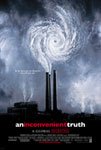
'An Inconvenient Truth' - A Must-Watch
 A 100-minute movie about one presentation delivered by a politican on global warming. This description is basically what 'An Inconvenient Truth' is about. Well, such description does not sound very attractive by itself - long presentation, speech by a politican... and it is about global warming.... oh no!! However, if you notice how popular this movie is, you can imagine that there must be something great about this presentation, amid the factual description at the beginning of this paragraph.
Yes, there have been a lot of discussion and attention on this movie, in many aspects. Of course, the main message delivered by the presentation / movie is one - how important it is for us to act now to stop global warming!! On the other hand, it is facinating to have Al Gore to spend so much of his time, effort and will (since not many other politicans or large corporation would love his speech) to deliver this presentation, and thus the above message.
For me, it is also how the presentation was conducted. Other website site like presentationzen.com have staged a lot of discussion and view on this movie. And let me offer mine here. In short, my comment on this presentation - 'It is a 100% must-watchfor those who is serious to learn about presentation skills'. I think it is close to perfect - let me highlight a few points:
Preparation - I always say that preparation is the single most important success factor in presentation. Al Gore is definitely prepared. You can see from the presentation that he knows the content very very well e.g. at a point, his speech is in pace with the automatic count down of years on the chart, and he does not have to look at the chart. In fact, he mentioned in the movie that he has made the presentation almost 1,000 times. (Not that we have to do 1,000 times, but you should be able to get familiarized with your content after say 10 times. Yet, I still see a lot of colleagues in my organisation I am working in failing to comprehend his / her visual aid and content as they deliver their 80%-similar sales pitch the 11-times.)
 Visual Aid - The slides are assisting his arguments. But at work, the slides are replacing or even prohibiting colleagues' arguments. Al Gore does it by showing the visual aid at the right time - mostly deliver your verbal arguments first, and then show your aid - not the opposite (which is common among our colleagues). On the other hand, the pictures are of high quality e.g. the earth photos in the beginning and relevant e.g. the balance at Chapter 28. In particular, I love the chart he used at the end to demonstrate how the CO2 emission can be reduced by various actions he suggested. They way he (or his team) designed and used the chart is simply an art - to show the contrast, to get the message across!!! In addition, he uses good variety of visual aid - comics, picture, chart, quote... and almost ZERO word slides!!
Movement / Set Up - The moment Al Gore used the elevating machine for him to point out what the world temperature will become - the message cannot be more clear!!
Opening - With a high-resolution earth picture in the dark room catching everyone's attention, emotionally
Ending - Asking for an action and appealing to the positive i.e. "All of us can make a difference to stop global warming"
I shall discuss in more details of specific presentation learning points from this movie..... stay tuned.
Tuesday, 3 April 2007
Managing the “mis-behaviour”
I am running a 5-day training workshop this week. I am not only a trainer for a few sessions but also the overall manager for the workshop.
Whilst I am writing now, today is the day 2 of the workshop. The discipline is just less than satisfactory. I have people coming late, absent on day 1, using mobile phone / blackberry, and showing up without enrollment on day 2. I am asking myself why people behave badly – and here are some thoughts
- Unclear instruction from the trainer e.g. they are simply not clear when they are supposed to come back
- Inadequate respect to the fellow participants and trainer
- Need to run the BAU business whilst in class e.g. called by boss or clients
- Personal reasons
- Boring class – irrelevant content, lack of interaction
Unsatisfactory class etiquette has always been the major area of concerns for trainers. I have been picking up and creating various ways to render better etiquette, and thus better learning environment for all of us. I think I have done well to tackle point 1 and 5. The most difficult ones are point 2 and 3. For point 4, it is more that you show your understanding and check whether they should leave the class at all.
A personal learning from this workshop on managing etiquette – I was quite upset this morning. Some gave me lousy reasons why they did not show up on day 1. On the other hand, despite reminder on day 1, some did not come to the room on time. And then after today session started, I still found some leisurely smoking outside the room. That really irritated me. I came up to them and asked ‘do you know when the program is supposed to start?’
If I could do it again, I shall have suppressed my emotion and said ‘I need some favour from you guys. I need to tighten up the time flow so that people do not have to stay late, and we could all have a better learning environment. Could you please help to take a lead?’
In short, people will likely follow if you show respect. Or people will do what you request rather what you instruct.
Emotion control is another important learning point. As a trainer, you will someday got irritated by some behaviours. But no matter how wrong they are, you will lose if you show your emotion, cos you are the one representing the atmosphere of the class. Emotion will also make you less able to challenge your own assumption – you will think ‘They do not show up because they do not respect me, or they are always on phone because they do not arrange back-up at work!!’ The reality is .... your participants may really have something urgent to attend e.g. I have one who has his father sent to the hospital during a class. You will surely regret if you got angry and show your emotion as he was always on a call!!!
So, the learning points are:
- Never show your emotion
- Give clear instruction e.g. tell exactly when to come back, show them the clock
- Give them 'consequence' if they violate 'ground rules'
- Don’t be boring (!!!)
- Pick up effective tricks / ways to manage mis-behavior
- Be aware of your assumption on why one mis-behaves
Monday, 2 April 2007
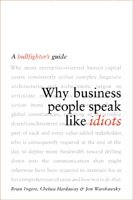
'Why business people speak like idiots'
 Another book recommended bythe presentationzen.com. There are a lot of good tips about how to get your message across effectively. On top of presentation, the book is actually more about business communication in general - more specifically about how ineffective business communication has become. Though mistakes mentioned in the book (e.g. use of complicated rather than simple words) are more often committed by native English speakers, the book still issues some relevant warning to non-native speakers. Beyond the book, the authors do continue their effort to 'fight the bull' via their website - fightthebull.com!!
Back to the topic of presentation- I am most impressed by an example mentioned in the book about the consequence of mis-use of Powerpoint - causing the failure of space shuttle Columbia.!! Judging from the Powerpoint slide itself (see the slide on the side) which was shown in a meeting the week before the disaster, the slide writer seemed to consider that the SOFI issue can cause serious damage. Yet, this message was unfortunately 'buried' somehow in the 'word slide'. (You can find the full report here.)
 In the organisation which I am working in, 'word slide' is just so common, to the extent that the Powerpoint slide is supposed to contain bullet points. There are a lot of reasons why this is the case. One reason is that 'word slide' is easy to prepare - just type, or even cut and paste. It requires no imagination or creativity. And you can readily use the 'word slide' as the handout.
 In short, slide is not properly used a visual aid..... and in fact, it is not the aid. It is the opposite - making communication less effective. It is sad. I personally have sit through countless presentations / product briefings, progress meetings.... where key messages failed to reach a reasonable proportion of the audience. It is a waste of time - enormous amount of time e.g. a simple briefing can easily have some 20 people for an hour. A wastage of half of the duration can be translated into 600 minutes or 10 hours equivalent. Just think of how much work can be accomplished in 10 hours!!! Not only quantity, but also quality - think of the deadly consequence in the Columbia shuttle case because of ineffective communication.
Well, I believe it all depends on whether you want to simply get the job (presentation) done, or really get the message across!!
Thursday, 29 March 2007
‘Hello’ + Name + Smile
I initiated and ran a short facilitation skills workshop today. There was a topic ‘What do the participants expect from an outstanding trainer?’ One of my colleagues raised a very interesting point – something not only the outstanding trainer, but also all trainers should have. It is like a must. So, according to him, participants will expect the trainer:
1. To greet them upon arrival
2. To remember their names
3. To smile
Simple but important!! Yet we miss to do it in a lot of occasions, when you are so occupied by the last-minute preparation. I will definitely remember it as the 3 basic golden rules.
Thursday, 22 March 2007
Difference between Great and Good facilitators
'Both deliver excellent learning experience, but a great facilitator will know exactly what he / she does well.' This quote is from an experienced facilitator in our organisation.
It is so true. Knowing exactly what you do well help you repeat your success. Ideally, you can do it by having someone observing your facilitation and giving you detailed feedback in form of time log. You will have such luxury sometimes when you are under a TTT process and watched by a master trainer. But such chance is rare. The alternative is to observe your own delivery, whilst you are doing it. What I am doing now is always to have a notebook on a dedicated space which I can easily reach though I am facilitating. I will scribble quickly when I notice something I have done well. It could be a quote, example, link, analogy or the way I explained an activity. Not easy.... but trying...
It is so true. Knowing exactly what you do well help you repeat your success. Ideally, you can do it by having someone observing your facilitation and giving you detailed feedback in form of time log. You will have such luxury sometimes when you are under a TTT process and watched by a master trainer. But such chance is rare. The alternative is to observe your own delivery, whilst you are doing it. What I am doing now is always to have a notebook on a dedicated space which I can easily reach though I am facilitating. I will scribble quickly when I notice something I have done well. It could be a quote, example, link, analogy or the way I explained an activity. Not easy.... but trying...
Subscribe to:
Posts (Atom)